Injury Prevention Strategies for Runners

Running is one of the most accessible forms of exercise, but it comes with inherent injury risks. Studies consistently show that close to 50% of runners experience an injury annually. These come in the form of shin splints, plantar fasciitis, IT band syndrome, and various other hip, knee, and ankle pains. The good news? A comprehensive, evidence-based approach to training can significantly reduce your injury risk while improving performance.

The Foundation: Understanding Running Injuries
Most running injuries are overuse injuries resulting from repetitive stress without adequate recovery. The biomechanical demands of running—where forces of 2-3 times body weight impact the lower extremities with each foot strike—make proper preparation essential. Training errors, inadequate strength, limited mobility, and poor biomechanics are the primary risk factors for injury.
Dynamic Warmup: Preparing Your Body for Performance
A proper warmup is non-negotiable for injury prevention. Unlike static stretching before exercise (which may actually decrease performance and increase injury risk), a dynamic warmup prepares your neuromuscular system, increases core temperature, and enhances range of motion.
What the science says: Structured warmup protocols reduce injury rates by up to 35% in runners. The warmup should progress from general cardiovascular activity to sport-specific movements that mirror running mechanics.
Essential components of an effective warmup:
5-10 minutes of light aerobic activity (easy jogging or brisk walking)
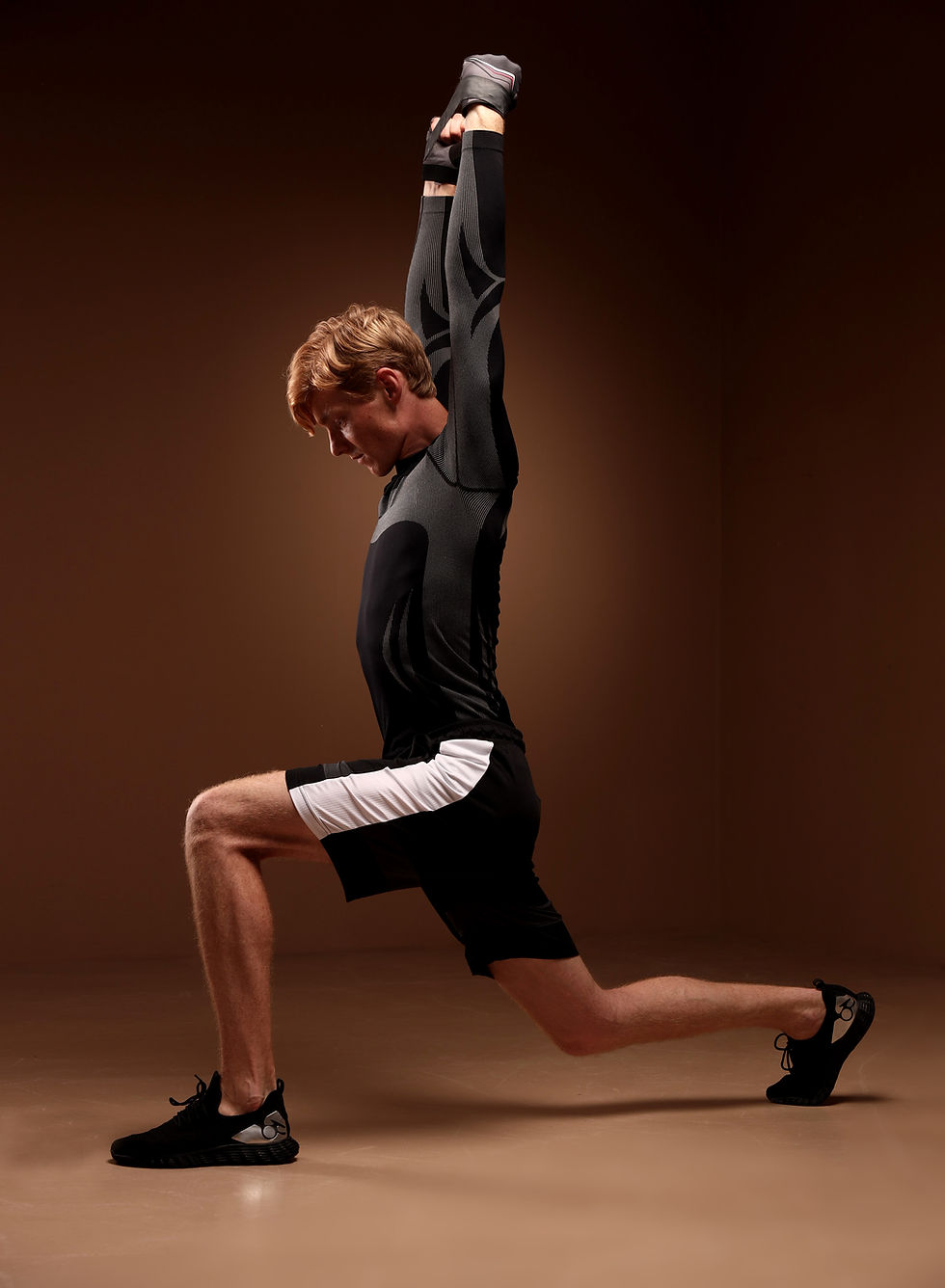
Dynamic stretches including leg swings, walking lunges, high knees, and butt kicks
Movement-specific activation of glutes, hip flexors, and core muscles
Progressive acceleration drills to gradually increase intensity
The warmup should last 10-15 minutes and leave you feeling energized, not fatigued. Your heart rate should be elevated and you should feel a light sweat beginning.
Cooldown: The Recovery Window
While often neglected, the cooldown plays a crucial role in recovery and injury prevention. An active cooldown helps remove metabolic waste products, reduces muscle soreness, and maintains blood flow to facilitate recovery processes.
Effective cooldown protocol:
5-10 minutes of easy jogging or walking to gradually lower heart rate
Static stretching of major muscle groups (hold each stretch 30-60 seconds)
Focus on hip flexors, quadriceps, hamstrings, calves, and IT band
Foam rolling or massage instruments to address tight areas
Regular stretching post-exercise improves flexibility and may reduce injury risk over time, particularly when combined with strength training.
Strength Training: The Injury Prevention Powerhouse
Perhaps no intervention has stronger evidence for injury prevention than strength training. The bulk of research has found that strength training reduces sports injuries to less than one-third and overuse injuries by almost half.
Why Runners Need Strength Training
Running is a single-plane, repetitive movement that creates muscular imbalances and leaves certain muscles underdeveloped. Strength training addresses these weaknesses, improves running economy (the oxygen cost of running at a given speed), enhances neuromuscular coordination, and increases tissue resilience.
Bodyweight Exercises: Building Functional Strength
Bodyweight exercises are accessible, require no equipment, and develop the stability and control essential for injury-free running.
Key bodyweight exercises for runners:
Single-leg exercises (crucial for addressing bilateral strength deficits):
Single-leg squats or pistol squats
Single-leg deadlifts (Romanian variation)
Single-leg bridges
Step-ups and step-downs
Core and hip stability:
Planks (front, side, and variations)
Bird dogs
Dead bugs
Clamshells and side-lying hip abduction
Plyometric and reactive strength:
Jump squats
Box jumps
Single-leg hops
Bounding exercises
Single-leg exercises are particularly effective because running is essentially a series of single-leg landings. These exercises expose and address strength asymmetries that increase injury risk.
Weight Training: Progressive Overload for Tissue Adaptation
While bodyweight exercises build foundational strength, progressive resistance training with weights drives the tissue adaptations necessary for handling high training loads.
Evidence-based lifting program for runners:
Lower body compound movements:
Back squats or front squats (2-3 sets of 6-12 reps)
Deadlifts or Romanian deadlifts (2-3 sets of 6-10 reps)
Bulgarian split squats (2-3 sets of 8-12 reps per leg)
Calf raises (both straight and bent knee variations)
Hip and posterior chain emphasis:
Hip thrusts (3 sets of 8-15 reps)
Nordic hamstring curls (proven to reduce hamstring injuries by up to 51%)
Lateral band walks and monster walks
Cable hip extensions and abductions
Heavy strength training (70-85% of one-rep max) performed 2-3 times weekly improves running economy by 3-8% and significantly reduces injury rates. The key is progressive overload—gradually increasing resistance over time to drive adaptation.

Multi-Planar Movement: Training Beyond the Sagittal Plane
Running occurs primarily in the sagittal plane (forward and backward motion), but the body must stabilize forces in all three planes of motion. Neglecting frontal plane (side-to-side) and transverse plane (rotational) training creates instability and increases injury risk, particularly at the hip, knee, and ankle.
Why multi-planar training matters:
Runners who train in multiple planes of motion demonstrate better dynamic stability, reduced injury rates, and improved performance. Multi-planar training can reduce lower extremity injuries by up to 39% in runners.
Frontal plane exercises (lateral stability):
Lateral lunges and side-to-side hops
Lateral band walks
Side shuffles and lateral bounds
Single-leg lateral reaches
Skater hops
Transverse plane exercises (rotational control):
Rotational medicine ball throws
Rotational lunges
Agility ladder drills with direction changes
Multi-planar integration:
Diagonal patterns in functional movement
Figure-8 running drills
Cone drills with cutting and pivoting
These exercises strengthen the muscles responsible for controlling excessive hip adduction, knee valgus (inward collapse), and tibial rotation—the biomechanical faults most strongly associated with common running injuries including IT band syndrome, patellofemoral pain, and shin splints.
Hurdle Drills: Dynamic Mobility and Neuromuscular Control
Hurdle drills develop dynamic flexibility, coordination, and movement quality. These drills challenge your body to move through large ranges of motion while maintaining control—a skill directly transferable to efficient, injury-resistant running mechanics.
Benefits supported by research:
Improves active range of motion without the performance decrements of static stretching
Enhances neuromuscular coordination and proprioception
Develops hip mobility in all planes of motion
Improves stride mechanics and running form
Essential hurdle drills:
Over-under-over: Step over the first hurdle with the lead leg, bring the trail leg under, then both legs step over the next hurdle. This drill develops hip flexor strength and hamstring flexibility simultaneously.
Lateral hurdle walks: Face perpendicular to hurdles and step over sideways, leading with one leg. Excellent for frontal plane hip mobility and gluteus medius activation.
Hurdle trail leg drill: Walking forward, lift the knee and externally rotate the hip to bring the leg over the hurdle sideways. This mimics the hip rotation necessary for efficient running and addresses common mobility restrictions.
Hurdle hops: Continuous hopping over hurdles develops reactive strength and landing mechanics under dynamic conditions.
Research shows that drills emphasizing hip mobility and dynamic control reduce the incidence of hip and knee injuries in runners. Start with 6-8 hurdles set at a comfortable height (12-18 inches) and perform 2-3 sets of each drill as part of your warmup or as a standalone mobility session.

Additional Evidence-Based Injury Prevention Strategies
Progressive Loading and Recovery
The biggest predictor of injury is rapid increases in training load. The "10% rule"—limiting weekly mileage increases to 10%—has some support, but more recent research suggests that monitoring consistent workload over several weeks provides better guidance. Proper guidance suggests that your current week's training should be 80-130% of your 4-week average.
Proper Footwear and Running Surface Variation
Contrary to popular belief, there's limited evidence that specific shoe types prevent injury. This is because every foot is different and what works for one person may not work for another. It is recommended to go to a running store to be fitted for proper footwear. Also, gradually rotating between different shoes and running surfaces (trails, roads, tracks) distributes stress across different tissues and may reduce overuse injury risk.
Gait Retraining
Increasing cadence by 5-10% above preferred rate has been shown to reduce impact forces and loading at the knee and hip. A study in Medicine & Science in Sports & Exercise found that cadence manipulation reduced common injury-related biomechanical factors by 20-30%. Instead of reaching for a longer, more powerful stride, try for a faster leg turnover.
Sleep and Nutrition
Often overlooked, adequate sleep (7-9 hours) and proper nutrition are essential for tissue recovery and adaptation. Research shows that athletes sleeping less than 8 hours per night have 1.7 times higher injury risk.
Putting It All Together: Your Weekly Training Structure
An evidence-based injury prevention program integrates all these elements into a sustainable weekly routine:
2-3 strength training sessions (on non-consecutive days):
Include both bodyweight and weighted exercises
Emphasize single-leg work and posterior chain
Incorporate multi-planar movements
30-45 minutes per session
Dynamic warmup before every run (10-15 minutes):
General aerobic activity
Dynamic stretching
Movement-specific activation
Progressive acceleration
Cooldown after every run (10-15 minutes):
Easy jogging/walking
Static stretching
Foam rolling as needed
1-2 dedicated mobility/drill sessions weekly:
Hurdle drills
Multi-planar movement patterns
Dynamic flexibility work
20-30 minutes per session
Progressive weekly mileage increases:
Monitor acute-to-chronic workload ratios
Include recovery weeks every 3-4 weeks
Vary intensity, duration, and terrain
The Bottom Line
Injury prevention isn't about a single intervention but rather a comprehensive approach that addresses the multifaceted demands of running. The science is clear: runners who incorporate dynamic warmups, structured cooldowns, progressive strength training in multiple planes of motion, and sport-specific drills experience significantly fewer injuries and improved performance.
The time investment is modest—adding 3-4 hours weekly of supplementary training—but the return is substantial: reduced injury risk, enhanced performance, and the ability to run consistently for years to come. Start conservatively, progress gradually, and prioritize consistency over intensity. Your future running self will thank you.
References
Beattie, K., et al. (2014). "The effect of strength training on performance in endurance athletes." Sports Medicine, 44(6), 845-865.
Gabbett, T. J. (2016). "The training-injury prevention paradox: should athletes be training smarter and harder?" British Journal of Sports Medicine, 50(5), 273-280.
Heiderscheit, B. C., et al. (2011). "Effects of step rate manipulation on joint mechanics during running." Medicine & Science in Sports & Exercise, 43(2), 296-302.
Herman, K., et al. (2012). "The effectiveness of neuromuscular warm-up strategies, that require no additional equipment, for preventing lower limb injuries during sports participation: a systematic review." BMC Medicine, 10, 75.
Hreljac, A. (2004). "Impact and overuse injuries in runners." Medicine & Science in Sports & Exercise, 36(5), 845-849.
Lauersen, J. B., Bertelsen, D. M., & Andersen, L. B. (2014). "The effectiveness of exercise interventions to prevent sports injuries: a systematic review and meta-analysis of randomised controlled trials." British Journal of Sports Medicine, 48(11), 871-877.
McHugh, M. P., & Cosgrave, C. H. (2010). "To stretch or not to stretch: the role of stretching in injury prevention and performance." Scandinavian Journal of Medicine & Science in Sports, 20(2), 169-181.
Millet, G. Y., et al. (2002). "Effects of concurrent endurance and strength training on running economy and VO2 kinetics." Medicine & Science in Sports & Exercise, 34(8), 1351-1359.
Milner, C. E., et al. (2006). "Biomechanical factors associated with tibial stress fracture in female runners." Medicine & Science in Sports & Exercise, 38(2), 323-328.
Nielsen, R. O., et al. (2013). "Training errors and running related injuries: a systematic review." International Journal of Sports Physical Therapy, 8(1), 32-52.
Thacker, S. B., et al. (2004). "The impact of stretching on sports injury risk: a systematic review of the literature." Medicine & Science in Sports & Exercise, 36(3), 371-378.
van Gent, R. N., et al. (2007). "Incidence and determinants of lower extremity running injuries in long distance runners: a systematic review." British Journal of Sports Medicine, 41(8), 469-480.


Comments